Lessons

Our instruments at a glance

One-to-one lessons with experienced teachers who take their time – every child and every adult learns with us at their own pace.

Piano

  • from around age 6
  • adults welcome too
  • classical to pop
Student playing the grand piano with great concentration

The piano is the most versatile starter instrument of all: every key has its own note, and first melodies come together within the very first lessons. From a Baroque minuet through film scores to a pop song – at the piano the whole world of music is open to you. Whether it's a grand, an upright or a digital piano at home: to begin with, a simple instrument with weighted keys is all you need.

Did you know? Why the piano is named after being soft and loud

When the Italian Bartolomeo Cristofori built the first piano in Florence around 1700, he called it “gravicembalo col piano e forte” – a harpsichord with soft and loud. That was precisely the revolution: for the first time, a keyboard instrument could whisper and thunder. “Pianoforte”, or piano for short, therefore simply means “soft-loud”. And here's another: in a modern concert grand, some 230 strings pull with a combined force of up to 20 tonnes – as much as three elephants weigh.
Source: Metropolitan Museum of Art – Cristofori grand piano

Violin

  • from around age 5
  • child sizes available
  • orchestral instrument
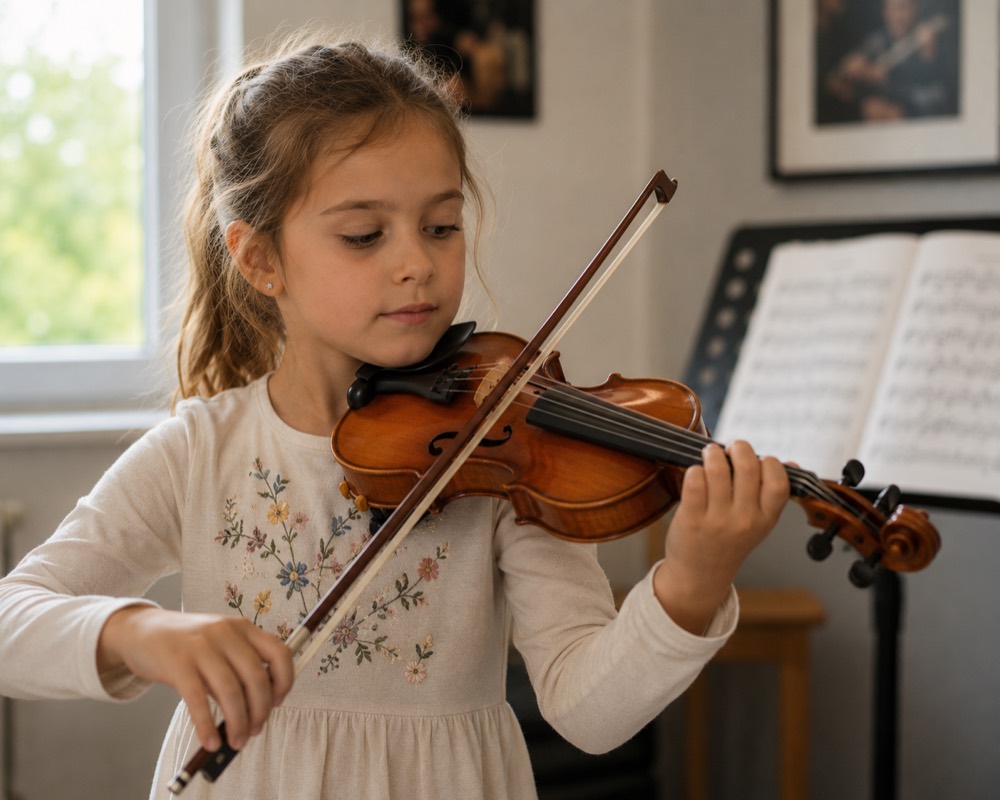
Young student playing the violin with great concentration

Few instruments sing as expressively as the violin. Many of the great composers dedicated their most beautiful works to it – and thanks to small child-sized violins, even five-year-olds can start bowing. Playing the violin trains the ear, posture and fine motor skills like no other instrument, and later opens the door to orchestra and ensemble playing.

Did you know? The million-dollar secret of the Stradivari

The most famous violins in the world were built by Antonio Stradivari over 300 years ago in Cremona – to this day they change hands for tens of millions, and the secret of their sound has never been fully unravelled. One theory: the wood grew especially slowly and densely during a “little ice age”. And by the way, a bow is strung with 150 to 200 hairs from a horse's tail.

Sources: Ellinger Geigenbau – record auction of the “Lady Blunt” · Study “Stradivari, violins, tree rings, and the Maunder Minimum” (Dendrochronologia)

Cello (Violoncello)

  • from around age 6
  • child sizes available
  • orchestra & chamber music
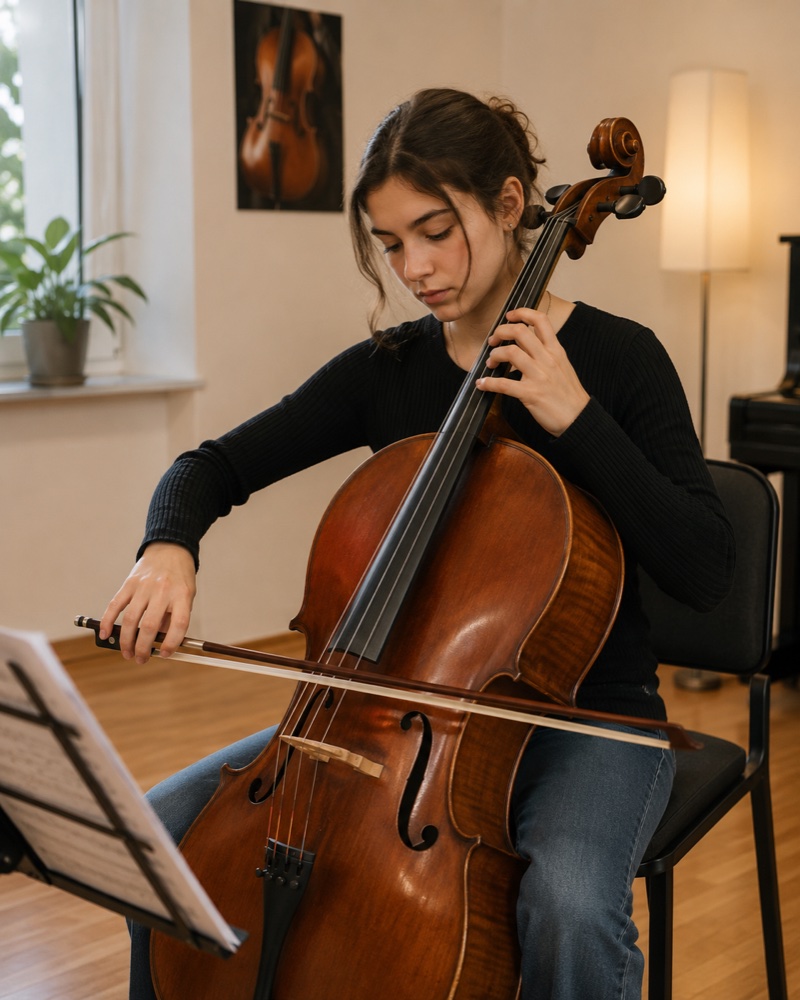
Young cellist playing with great concentration at the music stand

No other instrument comes as close to the human voice as the cello: warm, sonorous and carrying. It is played sitting down, resting on an endpin – the large body produces the full, deep tone. Its repertoire ranges from Bach's solo suites through the great chamber music to film scores and pop. Thanks to child-sized cellos, even six-year-olds can begin and grow quite naturally into their instrument.

Did you know? The suites from the sheet-music shop

When 13-year-old Pablo Casals was walking through Barcelona with his father in 1890, he discovered an old edition of Bach's suites for solo cello in a sheet-music shop. He practised them for twelve years before performing them in public for the first time – and turned the until-then barely noticed works into perhaps the most precious treasure a cellist can possess.

Source: The Strad – Pablo Casals and the Bach Cello Suites

Drums

  • from around age 6
  • rock, pop & jazz
  • drum kit at the school
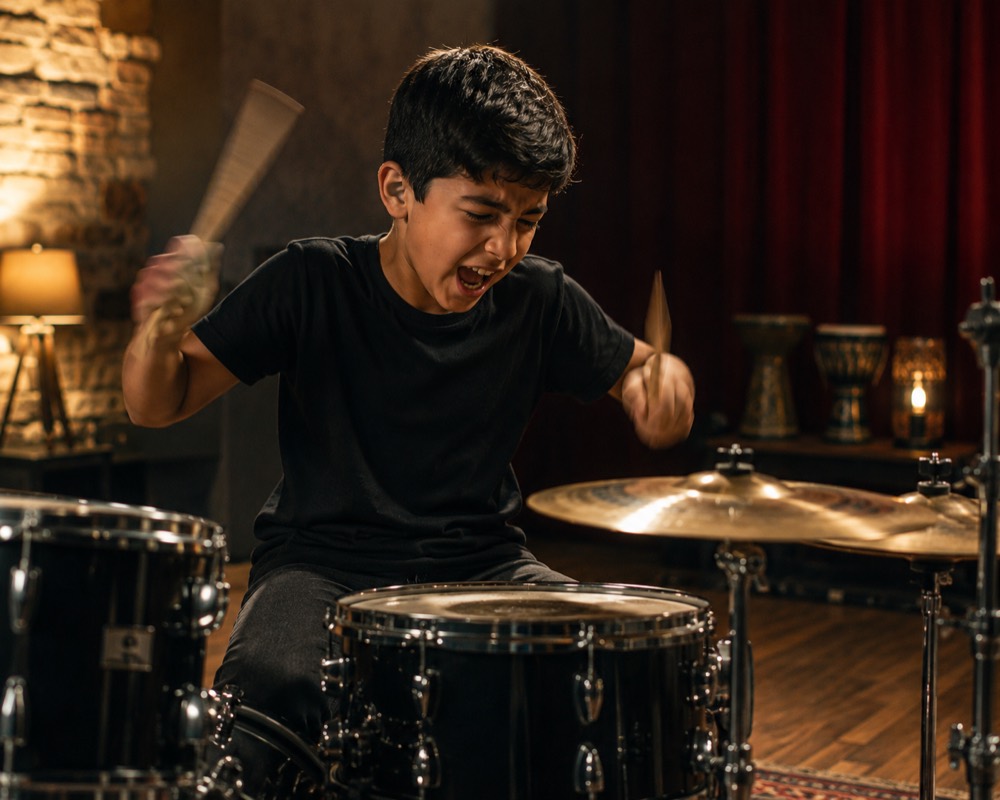
Boy playing the drums with full energy

Snare, bass drum, toms, hi-hat and cymbals – on the drum kit, rhythm is felt with the whole body. Lessons train coordination and a sense of timing, and they're fun from the very first groove. With us you'll practise on an acoustic kit; anyone wanting to practise quietly at home can switch to an electronic drum kit or a practice pad.

Did you know? Why the drum kit is barely 100 years old

Drums are ancient – but the drum kit is remarkably young: it emerged around 100 years ago in the USA, when resourceful theatre musicians combined bass drum, snare and cymbals so that a single drummer could do the work of several. What made it possible was an invention from 1909: the first mass-produced foot pedal for the bass drum, patented by William F. Ludwig. Without that pedal, jazz, rock and pop drumming as we know it simply wouldn't exist.

Source: Smithsonian – Ludwig Bass Drum Pedal (1909)

Saxophone

  • from around age 9
  • jazz, soul & classical
  • quick first successes
Student playing the saxophone at the music stand

Warm, powerful and unmistakable: the saxophone is the voice of jazz – yet despite its brass body it belongs to the woodwind family, because the sound is created at the reed. The fingering is logically laid out, so first melodies come together pleasingly quickly. Ideal for anyone who loves soul, jazz or pop music.

Did you know? The indestructible Mr Sax

The saxophone is one of the few instruments that carry their inventor's name: the Belgian Adolphe Sax had it patented in Paris in 1846. Legend has it that as a child he survived a good dozen accidents – from a fall from the third floor to a gunpowder explosion. He was just as tough as an inventor: against the mockery and lawsuits of his rivals, he pushed through his marvel of sound made of brass. Lucky for us, says jazz.

Source: The Brussels Times – Adolphe Sax

Clarinet

  • from around age 8
  • classical to klezmer
  • wide tonal range
Student playing the clarinet with focus in the lesson room

The clarinet is one of the most versatile woodwind instruments: velvety and soft in its low register, bright and radiant up high – its name comes from the Italian “clarinetto”, because its high register recalls the Baroque clarino trumpet. It is at home in the symphony orchestra, wind bands, klezmer and jazz.

Did you know? Mozart's great love

Wolfgang Amadeus Mozart quite literally fell in love with the clarinet the first time he heard it – its sound reminded him of the human voice. For his friend, the clarinettist Anton Stadler, he wrote the Clarinet Concerto in A major in the autumn of 1791 – just two months before his death: to this day the most famous work for the instrument, and for many one of the most beautiful ever written.

Source: Villa Musica – chamber music guide to K. 622

Flute

  • from around age 8
  • solo & orchestral instrument
  • jazz & rock too
Student playing the flute at the music stand

Light, silvery and radiant – the flute is one of the most popular wind instruments. Unlike the recorder, the sound is shaped at the side, across the blow hole, which allows for a wonderfully changeable tone. As a major solo and orchestral instrument, it has long since found its place in jazz and rock music too.

Did you know? The flute-playing king

Prussia's King Frederick the Great was a passionate flautist: almost every evening he gave a private concert at Sanssouci, and he composed 121 flute sonatas himself. His flute teacher Quantz is said to have been the only person at court allowed to criticise the king. Incidentally, the flute owes its present form to a goldsmith: around 1847 Theobald Böhm developed the key mechanism that is still used today.

Sources: friedrich-der-grosse.net – Music · Deutsches Museum – Theobald Böhm

Recorder

  • from around age 5
  • the ideal first step
  • 10–15 min. of practice a day is enough
Boy playing the recorder at the music stand at the music school

The recorder is the classic, time-honoured way into the world of music. To begin with, we recommend a soprano recorder made of wood or high-quality plastic. Short, regular practice sessions of 10 to 15 minutes are perfectly enough – more important than long practice is the daily joy of playing. Our teachers adapt to each child's pace, and a little encouragement from home works wonders.

Did you know? Henry VIII's 76 recorders

The recorder was once a royal instrument: England's King Henry VIII – himself a keen musician – owned, according to an inventory of 1547, no fewer than 76 recorders. Bach, Handel and Vivaldi also wrote great music for it. So the impression that it's mainly a children's instrument today is misleading: anyone who plays it seriously is holding a genuine concert instrument.

Source: Atlas Obscura – Henry VIII and the Recorder

Mandolin

  • for children & adults
  • plucked instrument
  • rarely offered
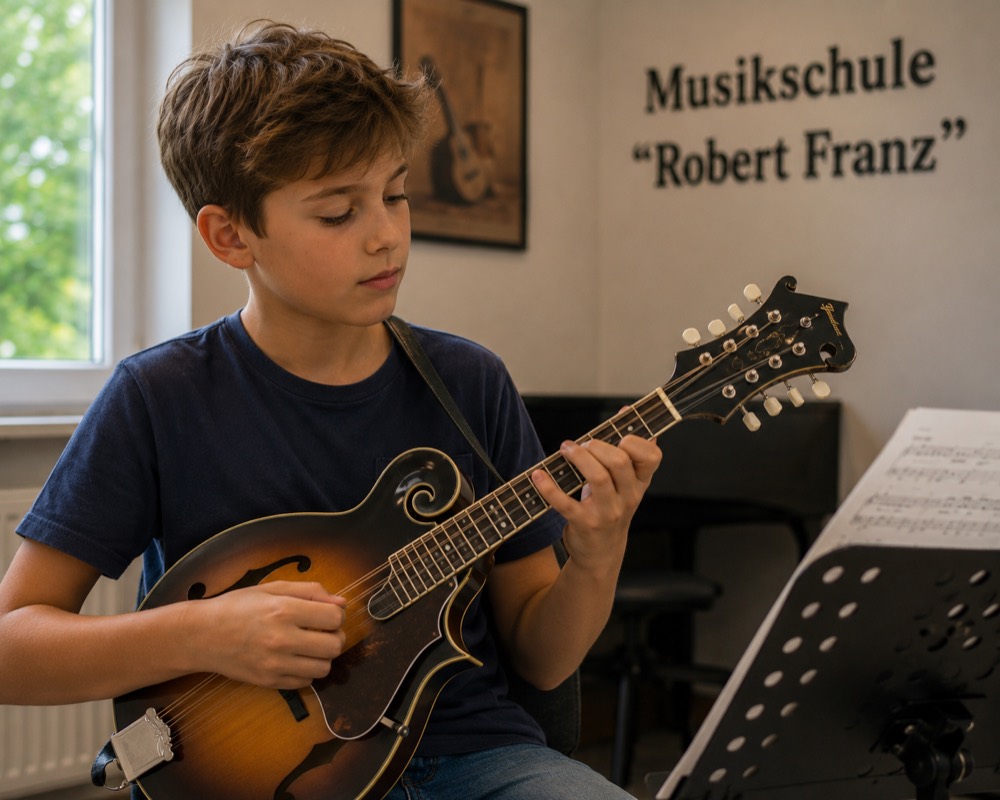
Student playing the mandolin in the music school's lesson room

An instrument with special charm and a long tradition: the mandolin has been played since the 17th century and belongs to the lute family. Its four pairs of strings are tuned in fifths like the violin – so any knowledge transfers easily later on. Mandolin lessons are rarely to be found; with us, they have a firm place.

Did you know? The instrument of lovers

When the famous serenade rings out in Mozart's opera Don Giovanni, someone in the orchestra reaches for the mandolin – as early as the 18th century it was regarded as the instrument of lovers, played beneath balconies in the evening. Vivaldi wrote virtuosic concertos for it, and even Beethoven composed a few tender pieces for the mandolin. Few instruments can sound more romantic.

Source: “Deh, vieni alla finestra” – Mozart's mandolin serenade

Ukulele

  • from around age 5
  • the ideal first step
  • affordable beginner instrument
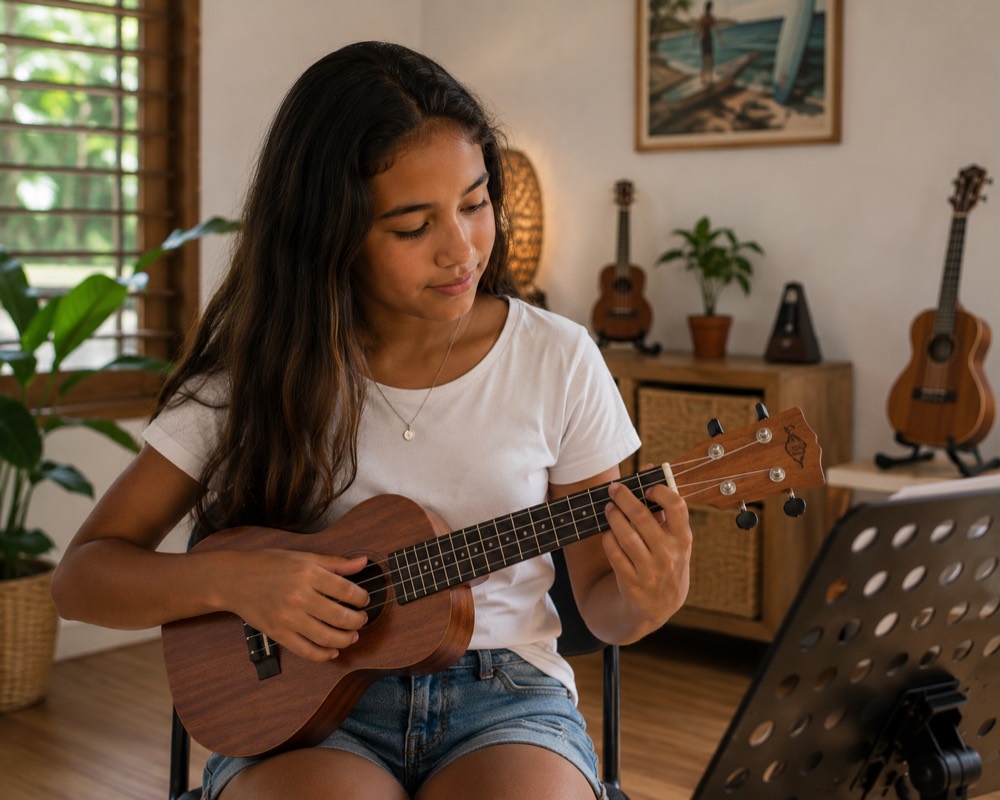
Teenager playing the ukulele in the music school's lesson room

Small, cheerful and surprisingly versatile: the ukulele is one of the most rewarding starter instruments there is. Four soft nylon strings are gentle on children's fingers, the first chords often come together in the very first lesson – and then it's time to sing and accompany, from nursery songs to today's pop hits. For adults looking for an easygoing instrument for travel, campfires and the sofa, the ukulele is a wonderful choice too.

Did you know? The “jumping flea” from Hawaii

The ukulele comes from Hawaii – it emerged in the 1880s, though with Portuguese roots: immigrants from the island of Madeira brought small plucked instruments such as the machete (also called the braguinha). From these the Hawaiians developed the ukulele, which quickly became the national instrument – even King Kalākaua was a great fan and promoted it at his court. The name means roughly “jumping flea” in Hawaiian (uku = flea, lele = to jump) – probably because of the nimble finger movements while playing.

Sources: Ukulele Magazine – The Birth of the Ukulele · Guitar-Player – History of the ukulele

Jazz Guitar

  • from around age 10
  • jazz, blues & swing
  • chords & improvisation
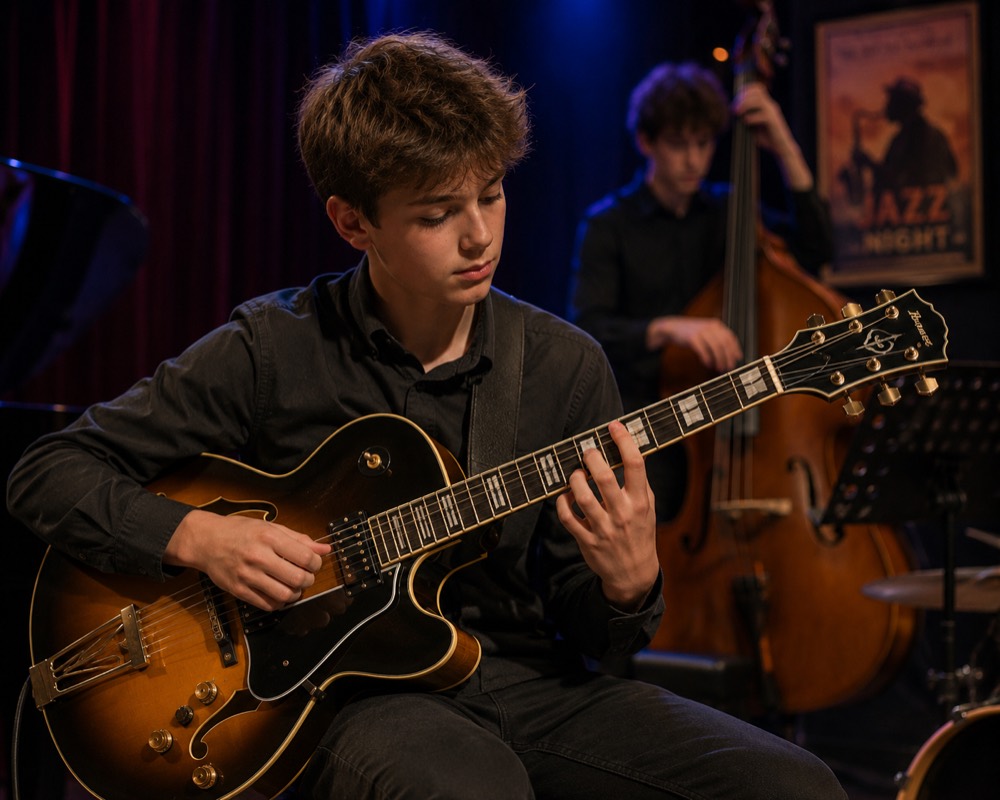
Teenager playing jazz guitar in the ensemble

Warm, round and unmistakable: the sound of the jazz guitar. Lessons are about more than fingerings – you'll learn chord accompaniment, melody playing and, step by step, how to improvise, from your first blues progression to a swing standard. Some prior experience on the guitar is helpful, but not a requirement. Ideal for teenagers and adults who want not just to play music back, but to invent it themselves.

Did you know? Django's two fingers

Perhaps the greatest jazz guitarist Europe has produced played with two paralysed fingers: in a fire in 1928, Django Reinhardt badly injured his left hand – his ring finger and little finger remained stiff. Instead of giving up, he invented an entirely new playing technique and became the legend of “Gypsy Jazz”. The lesson for everyone who practises: great music comes not from perfect conditions, but from ideas.

Source: Premier Guitar – Django Reinhardt and Gypsy Jazz

Cajón

  • from around age 6
  • rhythm you can touch
  • fits in any living room
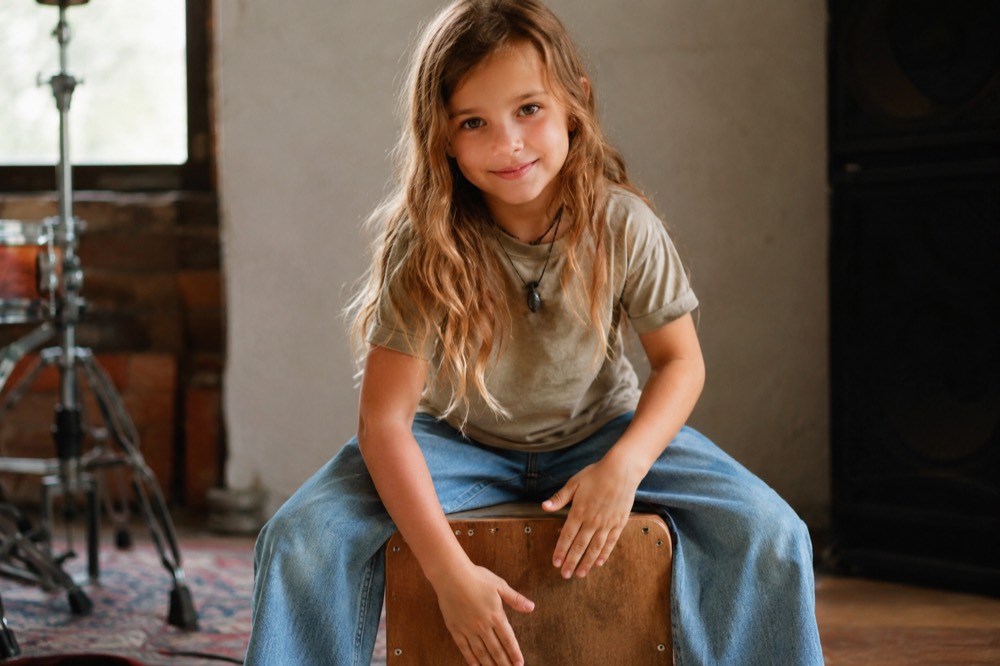
Girl sitting on a cajón and drumming

The cajón (pronounced “ka-hon”) is a box drum from Peru: you sit on it and play bass and snare sounds with your hands – a complete drum kit in a wooden box. It's quiet enough for home, quick to learn and the perfect rhythmic grounding: anyone who later wants to switch to the drum kit brings a sense of timing and hand independence with them from the cajón.

Did you know? The forbidden drum

The cajón owes its very existence to a ban: enslaved Africans in colonial Peru were forbidden to drum – so they played on shipping and fruit crates that no one could confiscate. Centuries later, in 1977, the flamenco guitarist Paco de Lucía heard the instrument at a party in Lima – played by the Peruvian master Caitro Soto – and bought his cajón off him then and there, that very evening. That's how the box came to Spain, into flamenco, and from there into pop music the world over.

Sources: Thomann – History of the cajón · El Comercio (Peru) – How Paco de Lucía brought the cajón to Spain

Voice

  • for teenagers & adults
  • pop to classical
  • vocal training & breathing technique
Young singer singing into the microphone at full voice

Your own voice is the most personal instrument of all – and everyone already carries it with them. In singing lessons we lay the technical foundations: breathing, rhythm and pitch accuracy. Building on that, we come to what truly makes a voice beautiful – standing behind what you sing. Our goal: that you sing as freely and light-heartedly in front of an audience as you otherwise only do in the shower.

Did you know? Can you really shatter a glass by singing?

The voice is the only instrument we always carry with us – and none sounds more personal. And yes, the rumour is true: a trained singer really can shatter a wine glass by singing. In 2005 the rock singer Jaime Vendera managed it on camera – with around 105 decibels of pure vocal power, entirely without amplification. Don't worry: in lessons we begin with the quiet notes.

Source: Scientific American – Can a Singer Shatter Glass?

Still not sure which instrument fits? No problem – during the no-obligation trial month you can take your time trying out what makes your heart sing. Send an enquiry now →